Why We Built Monitoristic
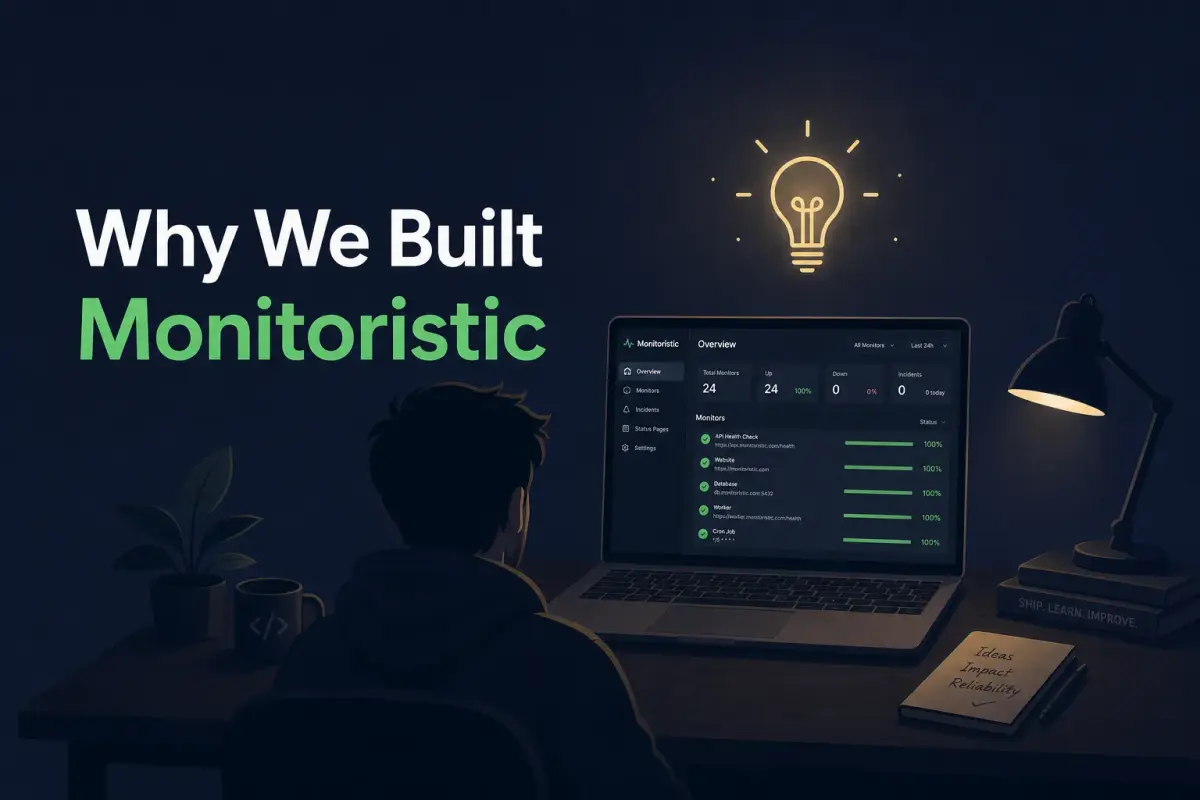
I didn't set out to build an uptime monitoring product. I just needed one.
The Problem Was Personal
I run a few web projects — sites, APIs, tools. Nothing huge, but enough that I care when they go down. And they do go down. Servers restart, deployments break things, SSL certificates expire at 2 AM on a Saturday.
Every time it happened, the same pattern played out: a user would email me, or I'd notice by accident hours later, or — worst of all — I'd check my analytics a week later and see a mysterious traffic dip that lined up perfectly with an outage I never knew about.
I needed monitoring. So I looked at what was available.
The Options Didn't Fit
The market has two ends, and not much in between.
On one end, free tools. They check every 5 minutes, which sounds fine until you realize your site could be down for nearly 5 minutes before a single check even fires. The features you actually need — status pages, maintenance windows, decent notifications — are locked behind paid tiers that aren't cheap once you add them up.
On the other end, enterprise platforms. Comprehensive, powerful, and priced for teams with dedicated DevOps budgets. Great if you're running infrastructure for a Fortune 500. Overkill if you're a developer with a handful of projects.
What I wanted was simple: check my sites frequently, tell me immediately when something's wrong, give me a status page I can share with users, and don't charge me enterprise prices for it.
That tool didn't exist. So I built it.
Building for Myself First
The first version of Monitoristic was exactly what I needed and nothing more. HTTP monitoring with fast, frequent checks. Telegram notifications because that's where I actually see messages. A status page so my users could check for themselves instead of emailing me.
I used it for my own projects for a while. It caught real outages — the kind that would have gone unnoticed for hours without monitoring. A deployment that silently failed. A database that ran out of connections at 3 AM. An API endpoint that started returning 500s after a dependency update.
Each time, I knew within a minute. Fixed it before most users noticed. That felt good.
Opening It Up
At some point, I realized the problem I'd solved for myself wasn't unique. Every solo developer, every small startup, every freelancer running client projects faces the same gap: the free tools aren't reliable enough, and the paid tools are too expensive or too complex.
So I decided to open Monitoristic up. Not as a free tool — I'd seen how that model works, and it's not sustainable for the kind of reliability monitoring demands. Instead, I priced it where it makes sense: $5 a month for developers with a few sites, $15 for growing teams, $30 for agencies and businesses with larger portfolios.
Every plan gets the same core features. Status pages. Incident tracking. Maintenance windows. Check intervals scale with your plan — from 5 minutes on Lite up to every minute on Business — but no features are locked behind higher tiers.
Why It's Not Free
This is deliberate, and I want to be transparent about it.
Free monitoring services have to cut costs somewhere. Slower check intervals, limited notifications, deprioritized infrastructure for free accounts. The tool is free, but the trade-off is that it's less reliable exactly when reliability matters most — during an actual outage.
Monitoristic costs money because monitoring infrastructure costs money. Every check, every notification, every status page request uses real resources. Charging from day one means I can invest in reliability instead of optimizing for free user volume.
I'd rather have fewer customers who trust the tool than millions of free accounts getting a degraded experience.
What's Next
Monitoristic is still early. The core is solid — HTTP monitoring, incident tracking, status pages, and notifications all work reliably. But there's more to build.
Email alerts, Slack and Discord integrations, custom domains for status pages, and a public API are all on the roadmap. I'm building in public, and you can see what's coming on the changelog page.
If you're a developer or a small team looking for monitoring that just works — without the enterprise complexity or the free-tier compromises — I built this for you. Because I built it for me first, and it solved the exact problem you're dealing with right now.